
Yes, exercise can raise blood sugar, and this surprises most people who assume working out always drives glucose down. The reality is more nuanced: your body type, the exercise you choose, and how hard you push all determine whether your blood sugar climbs, drops, or does both within a single session.
This matters more than most fitness content acknowledges. According to the American Diabetes Association (ADA), blood glucose management during physical activity is one of the most poorly understood areas of exercise science for both people with diabetes and active adults without it. Understanding the mechanism is not just a diabetes issue; it is a performance and health issue for anyone wearing a continuous glucose monitor (CGM) or tracking their metabolic health.
This article walks through exactly what your body does with blood glucose during and after different types of exercise. It covers the physiology, the exercise-type differences, the post-workout timing, and the practical steps you can take to train smarter.
Can Exercise Raise Blood Sugar?
Yes, exercise can raise blood sugar, and it does so through a well-documented hormonal process that is entirely normal. This is not a malfunction in your body. It is a deliberate fuel-delivery response built into human physiology.
When you start exercising, your working muscles demand more energy immediately. Your body’s first response is to release stored glucose from the liver into the bloodstream. This raises your blood sugar level, sometimes noticeably, before your muscles have had a chance to absorb it.
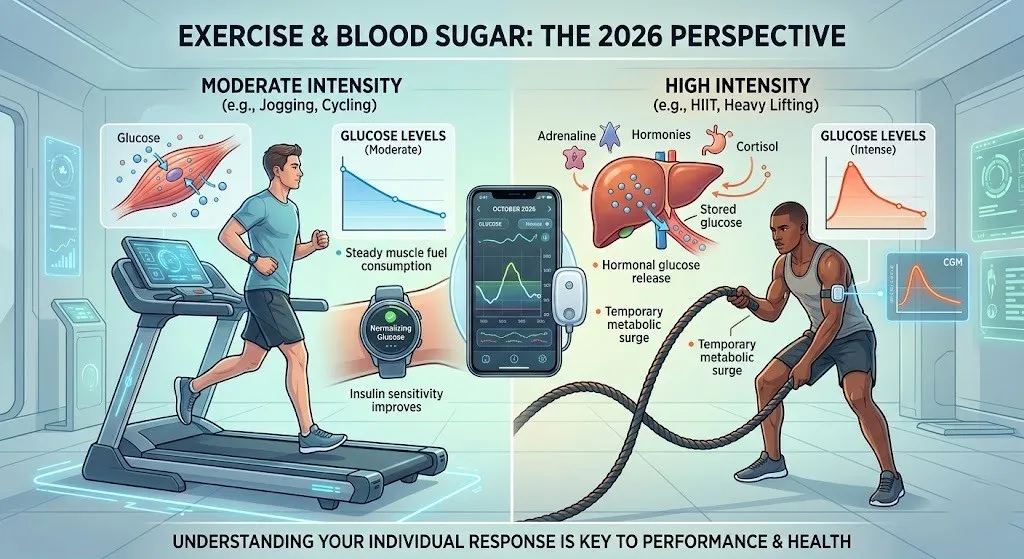
The effect is more pronounced during high-intensity activity than during moderate-paced exercise. Short, explosive efforts and heavy resistance work tend to push glucose higher than a brisk walk. The key variable is exercise intensity, not exercise itself.
Who experiences this most noticeably:
- People using continuous glucose monitors (CGMs) who can see real-time glucose data
- Individuals with type 1 diabetes, whose insulin is externally managed
- People doing high-intensity interval training (HIIT) or heavy strength training for the first time
- Anyone who trains in a fasted state, where counter-regulatory hormones are already elevated
Quick Tip:
- Seeing your glucose rise at the start of a workout is expected, not a reason to stop
- The rise is typically temporary and self-correcting in people with functioning insulin response
- If you take insulin, discuss exercise-related glucose management with your diabetes care team before changing your training intensity
Does Blood Sugar Rise During Exercise?
Blood sugar rises during exercise in many situations, particularly in the early minutes of a workout and during high-intensity efforts. This is not the same as a diabetic hyperglycemic episode. It is a controlled, physiologically intentional process.
Within the first five to ten minutes of exercise, your body activates the sympathetic nervous system. This triggers the release of adrenaline (epinephrine) from the adrenal glands. Adrenaline signals the liver to break down stored glycogen and release glucose into the bloodstream. That process is called glycogenolysis.
At moderate exercise intensities, your muscles absorb that released glucose rapidly. Blood sugar often stabilizes or drops. At high intensities, the liver releases glucose faster than the muscles can consume it. The result is a temporary net rise in blood glucose.
Blood sugar behavior during different exercise phases:
| Exercise Phase | Typical Glucose Response | Primary Driver |
|---|---|---|
| First 5 to 10 minutes | Often rises | Adrenaline-driven liver glycogen release |
| 10 to 30 minutes (moderate intensity) | Stabilizes or falls | Muscle glucose uptake increases |
| 30 to 60 minutes (moderate intensity) | Gradual decline | Sustained muscle uptake |
| High-intensity burst (any duration) | Sharp rise | Counter-regulatory hormone surge |
| Immediately post-exercise | Variable | Depends on intensity and insulin response |
This pattern is consistent across healthy adults, people with type 2 diabetes, and people with type 1 diabetes, though the magnitude of response differs significantly across these groups.
What Happens to Blood Glucose During Exercise?
During exercise, blood glucose is pulled in two opposing directions at the same time. Your liver pushes glucose out, and your muscles pull glucose in. Which force wins depends on how hard you are working.
Your skeletal muscles use a protein called glucose transporter type 4 (GLUT4) to absorb glucose from the bloodstream. Exercise causes GLUT4 to move to the muscle cell surface, allowing glucose uptake without insulin. This is one of the most remarkable things about physical activity: it bypasses the insulin pathway entirely.
At the same time, the liver is receiving hormonal signals to produce and release more glucose through two processes. The first is glycogenolysis, the breakdown of stored liver glycogen. The second is gluconeogenesis, the creation of new glucose from non-carbohydrate sources like amino acids and lactate. Both processes accelerate during exercise.
According to a review published in Medicine and Science in Sports and Exercise, the balance between hepatic glucose output and peripheral glucose uptake determines net blood glucose change during any given workout. When muscle uptake outpaces liver output, glucose falls. When liver output exceeds uptake, glucose rises.
Key processes happening simultaneously during exercise:
- GLUT4 translocation: Muscles absorb glucose without needing insulin
- Glycogenolysis: Liver breaks down glycogen and releases glucose
- Gluconeogenesis: Liver manufactures new glucose from non-carbohydrate substrates
- Counter-regulatory hormone release: Glucagon, adrenaline, cortisol, and growth hormone all increase liver glucose production
- Insulin suppression: Circulating insulin levels drop during intense exercise, reducing peripheral glucose uptake in non-muscle tissues
Key Takeaway: Exercise triggers both glucose release from the liver and glucose uptake by muscles simultaneously. Whether blood sugar rises or falls depends entirely on which process is faster during your specific workout.
How Does Exercise Affect Glucose Levels?
Exercise affects glucose levels through at least four distinct hormonal and cellular mechanisms, all of which operate at the same time. The net effect depends on intensity, duration, training history, and individual metabolic health.
The GLUT4 effect is the most metabolically favorable outcome. Regular exercise increases the total number of GLUT4 transporters in skeletal muscle. This means trained individuals can absorb glucose more efficiently, which is why consistent exercise improves long-term insulin sensitivity. The American College of Sports Medicine (ACSM) notes that a single bout of moderate-intensity aerobic exercise can improve insulin sensitivity for up to 24 hours afterward.
At the other end of the spectrum, intense or prolonged exercise activates a cascade of counter-regulatory hormones that raise glucose. Cortisol, released during physical stress, increases hepatic glucose production and reduces muscle insulin sensitivity. Growth hormone, which spikes during HIIT and heavy strength training, also drives glucose higher.
The practical takeaway is that the same person can see their glucose rise during a hard workout and fall during a moderate one. Both responses are physiologically appropriate.
How exercise intensity shapes glucose response:
| Intensity Level | Hormone Profile | Typical Glucose Change | Duration of Effect |
|---|---|---|---|
| Light (walking, gentle cycling) | Minimal counter-regulatory response | Stable or slight decline | Resolves quickly |
| Moderate (brisk walking, steady cycling) | Low-moderate adrenaline | Gradual decline | 1 to 4 hours post-exercise |
| High (HIIT, heavy lifting) | Strong adrenaline and cortisol spike | Rise during, fall after | Up to 24 hours post-exercise sensitivity gain |
| Maximal (sprinting, competition) | Full counter-regulatory surge | Sharp rise, then extended fall | Recovery-dependent |
Beginner modification: If you are new to exercise and monitoring glucose, start with 20 to 30 minutes of brisk walking. The glucose response is predictable and the counter-regulatory surge is minimal, making it the safest starting point for understanding your personal response.
Does Blood Sugar Spike After Exercise?
Blood sugar can spike after exercise, and the timing of that spike often surprises people. The spike does not always happen during the workout itself. It frequently appears in the 15 to 30 minutes after stopping.
This happens because counter-regulatory hormones, particularly adrenaline and cortisol, do not switch off the moment you finish your last rep. Their half-lives in the bloodstream mean they continue driving hepatic glucose production for a period after exercise ends. Meanwhile, your muscles are no longer contracting and absorbing glucose at the same rate.
The result is a temporary mismatch: the liver is still releasing glucose, but the main consumer, active muscle, has stepped back. That mismatch registers as a post-exercise glucose spike on a CGM.
Cleveland Clinic exercise physiologists describe this post-workout spike as common in people who perform high-intensity or short-duration exercise, and note it typically self-corrects within 30 to 60 minutes in individuals with intact insulin function.
Quick Tip:
- A post-exercise glucose reading 20 to 40 mg/dL above your pre-exercise baseline is within the range commonly observed after intense training
- Walking for 10 minutes at a cool-down pace after intense exercise helps blunt the post-workout spike
- Avoid checking glucose immediately after a heavy set of lifts; wait at least 10 minutes for a more representative reading
For people managing insulin doses around exercise, this spike window is important. Correcting too aggressively for a post-workout spike can lead to hypoglycemia once the counter-regulatory hormones clear. This is a well-documented pattern that warrants discussion with a diabetes care team for anyone using insulin.
Why Does Exercise Raise Blood Sugar?
Exercise raises blood sugar because the body prioritizes fuel delivery to working muscles over glucose conservation. The mechanism is hormonal, fast, and powerful.
The four primary counter-regulatory hormones involved are glucagon, adrenaline (epinephrine), cortisol, and growth hormone. Each plays a distinct role. Glucagon, released from the alpha cells of the pancreas, directly signals the liver to release stored glucose. Adrenaline accelerates the process and also suppresses insulin secretion from the beta cells, reducing the body’s ability to clear excess glucose quickly.
Cortisol amplifies liver glucose production and simultaneously makes peripheral tissues more resistant to insulin. Growth hormone, released in larger pulses during intense exercise and sleep deprivation, has a similar insulin-antagonizing effect. Together, these four hormones create a coordinated glucose-raising response that ensures your muscles never run out of fuel mid-effort.
Think of it like a fuel pump in a car engine. During a hard workout, your body opens the tap wider. The glucose flood into your bloodstream is intentional. The problem only arises when the body cannot re-close the tap efficiently, which is what happens in insulin-resistant or type 1 diabetic states.
The counter-regulatory hormone cascade during exercise:
- Glucagon: Signals liver to release glucose from glycogen stores
- Adrenaline (Epinephrine): Accelerates glycogenolysis and suppresses insulin release
- Cortisol: Promotes gluconeogenesis and reduces muscle insulin sensitivity
- Growth Hormone: Antagonizes insulin action and drives fatty acid mobilization
According to research in Diabetes Care, this four-hormone response is proportional to exercise intensity. Light activity produces a small response. Maximal efforts produce a full hormonal surge.
Does Strength Training Raise Blood Sugar?
Strength training (also called resistance training or weight training) reliably raises blood sugar during the session and in the immediate post-exercise window. This is one of the most consistent findings in exercise glucose research.
Heavy compound lifts like squats, deadlifts, and bench press demand rapid energy production through the anaerobic glycolytic pathway. This pathway uses glycogen stored in muscle cells directly, but it also triggers a strong counter-regulatory hormone release, especially adrenaline and growth hormone. The liver responds by dumping glucose into the bloodstream.
A study published in the Journal of Diabetes Science and Technology found that heavy resistance exercise produced acute blood glucose increases in both people with type 2 diabetes and healthy controls. The spike occurred during the heaviest sets and persisted for 15 to 30 minutes post-workout before insulin sensitivity improvements began to manifest.
Strength training glucose response by rep range and load:
| Training Style | Load | Glucose Response During | Post-Exercise Trend |
|---|---|---|---|
| Heavy strength (1 to 5 reps) | 85 to 100% 1RM | Strong rise | Falls over 1 to 2 hours |
| Hypertrophy (8 to 12 reps) | 65 to 80% 1RM | Moderate rise | Falls over 30 to 90 minutes |
| Muscular endurance (15 to 20 reps) | 50 to 65% 1RM | Mild rise or stable | May fall during or after |
| Circuit training (light, rapid) | 40 to 60% 1RM | Variable, often stable | Moderate fall |
Beginner modification: If you are new to strength training and monitoring glucose, start with lighter loads and higher repetitions. The hormonal surge is less pronounced, making glucose behavior more predictable. Avoid training to muscular failure in early sessions.
People with uncontrolled hyperglycemia should have blood glucose below 250 mg/dL before beginning strength training, per ADA guidelines. If ketones are present, strength training should be postponed until metabolic stability is restored.
Key Takeaway: Strength training reliably spikes blood sugar during and immediately after the session because of the anaerobic energy demand and the counter-regulatory hormone surge it triggers, especially during heavy, low-rep efforts.
Does HIIT Raise Blood Sugar?
High-intensity interval training (HIIT) produces some of the most dramatic exercise-induced blood sugar spikes of any training modality. The short, explosive nature of HIIT efforts triggers a disproportionately large counter-regulatory hormone response relative to the duration of the workout.
During each high-intensity interval, adrenaline surges rapidly. The liver responds immediately with a glucose release. Because the intervals are typically short (20 to 60 seconds), the muscles do not have time to fully absorb the released glucose before the next interval begins. The result is a stacking effect: each interval adds to the glucose load already in circulation.
Research published in Medicine and Science in Sports and Exercise found that sprint-interval training caused blood glucose to rise by an average of 15 to 30 mg/dL in healthy, non-diabetic adults during the workout, with levels peaking in the 15 minutes after the final interval. This rise was followed by a prolonged period of enhanced insulin sensitivity lasting up to 24 hours.
Typical HIIT glucose response pattern (healthy adult baseline: 90 mg/dL fasting):
| Time Point | Approximate Glucose Level | Notes |
|---|---|---|
| Pre-workout | 90 mg/dL | Fasted baseline |
| During intervals | 105 to 125 mg/dL | Counter-regulatory surge |
| 15 minutes post-HIIT | 115 to 135 mg/dL | Peak post-exercise spike |
| 30 to 60 minutes post | 90 to 100 mg/dL | Returns toward baseline |
| 12 to 24 hours post | Enhanced insulin sensitivity | Long-term metabolic benefit |
Beginner modification: New exercisers should start with a 1:3 work-to-rest ratio (20 seconds on, 60 seconds rest) rather than a 1:1 ratio. This gives the glucose response time to partially clear between efforts and reduces the stacking effect.
For people using insulin pumps or rapid-acting insulin, the post-HIIT spike followed by extended sensitivity can make glucose management unpredictable. Working with a certified diabetes educator is advisable before adding HIIT to a training program.
Does Cardio Raise Blood Sugar?
Cardiovascular exercise (aerobic exercise) at moderate intensity is the training type most likely to lower blood sugar rather than raise it. However, even cardio can cause temporary glucose rises depending on intensity and duration.
Steady-state moderate-intensity cardio, such as cycling at a conversational pace, swimming, or low-intensity steady-state (LISS) training on a treadmill, produces a controlled adrenaline response. The muscle glucose uptake through GLUT4 translocation generally keeps pace with or exceeds hepatic glucose output. Blood glucose typically falls steadily during sessions lasting 30 minutes or longer.
At higher intensities, even within the aerobic category, the picture changes. Pushing into the lactate threshold zone or above causes a noticeable counter-regulatory hormone surge. The ACSM notes that exercise above 70 to 80 percent of maximum heart rate consistently produces glucose-raising effects similar to HIIT, even when the activity itself is nominally “cardio.”
Cardio intensity and blood sugar direction:
| Cardio Type | Intensity | Typical Glucose Response |
|---|---|---|
| Walking (brisk, flat) | 40 to 55% max HR | Stable or slight decline |
| Jogging / easy run | 55 to 65% max HR | Gradual decline |
| Cycling (moderate pace) | 55 to 70% max HR | Gradual decline |
| Running (tempo pace) | 75 to 85% max HR | Stable or mild rise |
| Sprinting / race effort | 90 to 100% max HR | Clear rise during, fall after |
Beginner modification: People new to monitoring their glucose response to cardio should begin with 20 to 30 minutes at a pace where they can hold a conversation. This intensity reliably produces a glucose decline and is the most predictable starting point.
People with autonomic neuropathy or hypoglycemia unawareness should exercise with a partner or wear a CGM during cardio, as the normal warning signs of low blood sugar (shakiness, sweating) may not present reliably.
Does Blood Sugar Increase After Exercise?
Blood sugar can increase after exercise, not just during it. The post-exercise glucose rise is a recognized and well-studied response, especially after high-intensity training.
The mechanism is the same counter-regulatory hormone cascade described above, but with a twist: the hormones linger in the bloodstream after exercise ends. Your heart rate slows. Your muscles stop working as hard. But adrenaline and cortisol still signal the liver to keep releasing glucose. The muscles, no longer contracting forcefully, absorb less of it. Blood glucose climbs.
This post-exercise rise can catch people off guard, especially those checking glucose 10 to 15 minutes after finishing a hard session. A reading that looks alarmingly high may simply be the tail end of the hormonal response, not a sign of metabolic dysfunction.
Quick Tip:
- Wait at least 20 to 30 minutes after finishing intense exercise before treating a high glucose reading as actionable
- A light 5 to 10 minute cool-down walk reduces the post-exercise spike by helping clear counter-regulatory hormones faster
- Eating a protein-rich, moderate-carbohydrate meal within 30 to 60 minutes of training supports faster glucose normalization
The National Institutes of Health (NIH) has noted that the post-exercise glucose response varies substantially between individuals based on fitness level, training history, body composition, and insulin sensitivity. Highly trained athletes tend to show smaller post-exercise spikes because their counter-regulatory response is more calibrated and their GLUT4 expression is higher.
Modification note: People on sulfonylureas or insulin are at elevated risk of delayed hypoglycemia after intense exercise, not hyperglycemia. The post-exercise rise they observe may be followed by a prolonged drop 6 to 12 hours later, sometimes during sleep. This pattern warrants discussion with a prescribing clinician.
Key Takeaway: Blood sugar can rise after exercise ends, not just during it, because counter-regulatory hormones keep driving liver glucose output even after muscles have stopped contracting.
What Is Post-Exercise Hyperglycemia?
Post-exercise hyperglycemia refers to a condition where blood glucose remains elevated above normal levels for a sustained period after exercise ends, beyond what is expected from the short-term hormonal response.
In people without diabetes, post-exercise hyperglycemia is typically brief and self-correcting. The insulin response clears excess glucose within 30 to 90 minutes. In people with type 1 diabetes, whose insulin must be administered externally, the clearing process can take much longer. In people with type 2 diabetes and significant insulin resistance, the liver’s continued glucose output may persist longer than normal.
The ADA recognizes post-exercise hyperglycemia as a management challenge, particularly for people doing anaerobic exercise. Their clinical guidelines note that insulin correction for post-exercise highs should be approached conservatively, as the risk of overcorrecting into hypoglycemia is real.
When post-exercise hyperglycemia becomes clinically relevant:
- Blood glucose remains above 180 mg/dL for more than 2 hours after exercise
- Glucose continues rising despite reduced activity and time passing
- Accompanied by symptoms like excessive thirst, frequent urination, or headache
- Occurring consistently after every session of a specific exercise type
These patterns, particularly if persistent across multiple sessions, are worth raising with a healthcare provider who specializes in metabolic health or diabetes care. A pattern of post-exercise hyperglycemia may indicate that insulin dosing or training structure needs adjustment, not that exercise should be stopped.
Modification: People with type 1 diabetes using an insulin pump may benefit from a temporary basal rate increase during and immediately after high-intensity exercise to blunt post-exercise hyperglycemia, but this strategy must be individually calibrated with a diabetes care team.
Blood Sugar Drop After Exercise: What You Need to Know
Blood sugar can drop significantly after exercise, and for some people, this drop is delayed by several hours. Both the immediate and the delayed responses carry practical importance.
The immediate post-exercise glucose drop is driven by continued GLUT4 activity in muscle cells. Even after you stop exercising, GLUT4 transporters remain active at the muscle surface for a period, absorbing glucose from the bloodstream without insulin. This is sometimes called the insulin-mimetic effect of exercise and is one of the primary mechanisms behind exercise’s long-term metabolic benefits.
The delayed hypoglycemia response, sometimes called the Somogyi-adjacent exercise effect in fitness contexts, can occur 6 to 12 hours after a strenuous workout. During this window, the body is replenishing muscle glycogen stores. Glucose is continuously drawn from the bloodstream for this purpose. If carbohydrate intake is insufficient or insulin doses are not adjusted, blood glucose can fall below the normal range during this window, including during sleep.
Post-exercise hypoglycemia risk window:
| Time After Exercise | Risk Level | Monitoring Recommendation |
|---|---|---|
| 0 to 2 hours | Moderate | Check before eating post-workout meal |
| 2 to 6 hours | Lower (glucose often normalizing) | Standard monitoring schedule |
| 6 to 12 hours | Elevated, especially after very intense sessions | Check before bed; consider bedtime snack if applicable |
| During sleep (nocturnal) | High for insulin users after hard training | CGM alert thresholds recommended |
For people without diabetes and without glucose-lowering medications, the blood sugar drop after exercise is rarely clinically problematic. It is the normal, beneficial outcome of exercise improving glucose disposal. For anyone on insulin, sulfonylureas, meglitinides, or similar agents, the delayed drop window requires proactive management.
Blood Sugar Spike After Exercise When You Don’t Have Diabetes
A blood sugar spike after exercise in a person without diabetes is more common than most fitness content acknowledges. It is usually normal, temporary, and does not indicate that something is wrong.
Non-diabetic exercisers with CGMs frequently report glucose readings of 120 to 160 mg/dL or even higher immediately after HIIT or heavy strength sessions. This surprises and concerns people who associate high glucose with disease. The distinction is in the recovery: a healthy metabolic system clears the spike within 30 to 60 minutes through a normal insulin response.
Research in the Journal of Diabetes Science and Technology has documented that healthy, lean, non-diabetic adults performing maximal-intensity exercise routinely produce transient glucose elevations that would technically classify as “hyperglycemic” during the spike window. These readings normalize quickly and are followed by extended periods of improved insulin sensitivity.
What “normal” looks like for a non-diabetic exerciser during and after hard training:
- Pre-workout glucose: 80 to 100 mg/dL
- During intense intervals or heavy sets: 110 to 150 mg/dL
- Peak post-exercise (15 to 30 minutes after): 120 to 160 mg/dL
- 60 to 90 minutes post-exercise: Returning toward 90 to 100 mg/dL
- 2 to 4 hours post: Normal fasting-range levels restored
When should a non-diabetic person take their post-exercise spike seriously? If glucose remains above 180 mg/dL for more than two hours after moderate-intensity exercise, or if you see consistently high readings at rest, a conversation with a physician about metabolic health testing is reasonable. Not as a panic response, but as a proactive data point worth investigating.
Modification: Non-diabetic exercisers who are concerned about glucose spikes can moderate the response by adding a 15-minute cool-down walk after intense sessions, timing a small carbohydrate and protein snack appropriately, and ensuring they are not training in a severe caloric deficit, which elevates the counter-regulatory hormone response.
Key Takeaway: Non-diabetic exercisers can and do experience temporary blood sugar spikes after intense workouts. This is a normal hormonal response, not a sign of diabetes, and it self-corrects within 30 to 90 minutes in people with healthy insulin function.
How Long Does Blood Sugar Stay Elevated After Exercise?
In most people without diabetes, blood sugar returns to pre-exercise levels within 30 to 90 minutes after stopping exercise. The timeline varies based on exercise intensity, individual insulin sensitivity, nutrition timing, and training history.
After moderate-intensity aerobic exercise, glucose often continues to fall rather than spike. You may see your lowest post-workout reading 30 to 60 minutes after finishing a steady-state cardio session. After high-intensity exercise like HIIT or heavy strength training, the spike peaks around 15 to 30 minutes post-workout and then declines over the following hour.
Trained individuals clear exercise-induced glucose elevations faster than untrained individuals. This is because years of consistent training increase GLUT4 expression in muscle tissue, improve hepatic insulin sensitivity, and calibrate the counter-regulatory hormone response to be more proportional and efficient.
Estimated blood sugar elevation timelines by exercise type:
| Exercise Type | Spike Peak | Return to Baseline | Sensitivity Benefit Duration |
|---|---|---|---|
| Light walking | No spike typical | N/A | 2 to 4 hours |
| Moderate cardio (30 to 45 min) | None to minimal | 30 to 60 minutes | 4 to 12 hours |
| HIIT (20 to 30 min) | 15 to 30 min post | 60 to 90 minutes | 12 to 24 hours |
| Heavy strength training | During to 20 min post | 60 to 120 minutes | 12 to 24 hours |
| Prolonged endurance (90+ min) | May drop significantly | Variable; risk of delayed low | Up to 48 hours |
For people with type 1 diabetes, the clearance timeline is entirely dependent on insulin on board, pump settings, and carbohydrate intake. There is no reliable universal timeline for this population without individualized data from a CGM.
When Should You Check Blood Sugar After Working Out?
The best time to check blood sugar after working out depends on what type of exercise you did and what you are trying to learn from the reading. Timing matters more than most people realize.
Checking immediately after finishing a set of heavy squats or the last sprint interval gives you a reading that reflects the peak of counter-regulatory hormone activity. That number is not representative of where your glucose is heading. Waiting 20 to 30 minutes gives you a more useful data point that reflects the transition from the exercise stimulus to the recovery phase.
For glucose monitoring around workouts, exercise physiologists and diabetes educators generally recommend three check points:
- 30 minutes before exercise: Establishes your baseline and determines if pre-workout nutrition or insulin adjustment is needed
- During long sessions (if using a CGM): Real-time data allows in-session adjustments, particularly for sessions lasting more than 45 to 60 minutes
- 20 to 30 minutes after exercise: Captures the post-exercise trajectory before eating, which is the most clinically useful reading
Who benefits from structured post-exercise glucose monitoring:
| Population | Monitoring Priority | Specific Concern |
|---|---|---|
| Type 1 diabetes | High | Post-exercise insulin requirements, overnight lows |
| Type 2 diabetes (on medication) | High | Hypoglycemia risk with sulfonylureas or insulin |
| Prediabetes | Moderate | Understanding how different exercise affects glucose trends |
| Non-diabetic CGM users | Lower | Curiosity, metabolic health tracking, performance optimization |
| Athletes in caloric deficit | Moderate | Elevated counter-regulatory response from underfueling |
For anyone not using a CGM, a standard fingerstick blood glucose meter used at these three time points provides enough data to understand your personal exercise glucose response without obsessive monitoring.
Exercise Blood Sugar Management: Practical Strategies
Managing blood sugar around exercise comes down to understanding your body’s response pattern and building a consistent pre- and post-workout routine that accounts for it.
The most practical first step is establishing your personal glucose response baseline. Do this by checking glucose before, 30 minutes into, and 20 minutes after three or four different workout types. You will quickly see which exercise categories cause spikes, which cause drops, and how long each response lasts for your specific physiology.
According to the ACSM, people aiming to improve glucose control through exercise should prioritize consistency over intensity. A moderate-intensity aerobic workout performed five days per week produces more durable insulin sensitivity improvements than two maximal-effort sessions separated by several rest days.
Practical blood sugar management strategies around exercise:
- Before training: Avoid starting a session with glucose below 90 mg/dL if on glucose-lowering medication; consume 15 to 30 grams of fast-acting carbohydrates if starting low
- Hydration: Dehydration concentrates blood glucose; drink water before, during, and after every session
- Cool-down: Ten minutes of light walking after intense exercise blunts the post-workout spike by sustaining muscle glucose uptake at a lower intensity
- Post-workout nutrition: A meal with 20 to 40 grams of protein and moderate complex carbohydrates within 60 minutes supports glycogen replenishment and stabilizes glucose
- Sleep and recovery: Poorly recovered muscles show reduced GLUT4 activity, meaning the next day’s insulin sensitivity benefit is diminished
- Consistency: Regular exercise is the most reliable way to improve baseline insulin sensitivity; sporadic intense sessions produce less predictable glucose responses
For individuals with type 1 diabetes or those on insulin therapy, these general strategies are a starting framework only. The individual variability in insulin-on-board, pump settings, carbohydrate ratios, and correction factors requires personalized guidance from a certified diabetes educator or endocrinologist familiar with your training load.
Modification: If you are managing blood sugar but cannot tolerate intense exercise due to joint issues, cardiovascular limitations, or fatigue, resistance band training, chair-based strength exercises, and water aerobics produce meaningful glucose management benefits with a lower counter-regulatory hormone response than land-based high-intensity training.
Key Takeaway: The most effective exercise blood sugar management strategy is consistent, moderate-intensity training combined with timed monitoring, proper hydration, and a post-workout meal that includes both protein and carbohydrates.
Frequently Asked Questions About Exercise and Blood Sugar
Can exercise raise blood sugar even if I don’t have diabetes?
Yes, exercise can raise blood sugar in people without diabetes, especially after high-intensity or heavy strength training.
The counter-regulatory hormone response is a normal physiological process that occurs regardless of diabetic status.
Blood glucose in non-diabetic individuals typically returns to baseline within 30 to 90 minutes as the body’s insulin response clears the excess.
Why does my blood sugar go up after a workout instead of down?
Blood sugar rises after exercise because counter-regulatory hormones like adrenaline and glucagon signal the liver to release glucose into the bloodstream.
This hormonal response does not switch off immediately when exercise ends, which is why the peak reading often appears 15 to 30 minutes after the session.
In people with healthy insulin function, the rise is temporary and self-correcting without any intervention.
Which type of exercise raises blood sugar the most?
High-intensity interval training (HIIT) and heavy strength training produce the largest and most rapid blood sugar spikes of any exercise modality.
Both involve a strong anaerobic component that triggers a disproportionately large counter-regulatory hormone surge.
Moderate-intensity steady-state cardio typically lowers blood sugar rather than raising it, making it the most predictable option for people trying to avoid glucose spikes.
How long after exercise does blood sugar return to normal?
In people without diabetes, blood sugar generally returns to pre-exercise levels within 30 to 90 minutes after high-intensity exercise.
After moderate-intensity aerobic exercise, glucose often continues falling rather than spiking, and may reach its lowest point 30 to 60 minutes post-workout.
People with type 1 diabetes or significant insulin resistance will have longer and more variable clearance times that depend on insulin management and nutrition timing.
Is it dangerous if my blood sugar spikes during exercise?
A temporary spike during intense exercise is normal and not dangerous for people with healthy metabolic function.
The concern arises when glucose remains above 180 mg/dL for more than two hours after stopping exercise, when ketones are present, or when spikes occur consistently even at moderate exercise intensities.
Anyone experiencing persistent post-exercise hyperglycemia should discuss the pattern with a physician or diabetes specialist to determine if medication, nutrition, or training adjustments are needed.
Putting It All Together
Exercise and blood sugar have a more complex relationship than “working out lowers glucose.” Intensity, duration, and training type all shape whether your blood sugar rises, falls, or both within a single session. Understanding that complexity is what separates effective training from confused monitoring.
Start with your baseline. Check glucose before and after a few different workouts. Identify your personal response pattern. Then use the strategies in this article to work with your physiology, not against it.
If you are managing diabetes alongside exercise, the principles here are a foundation. Your individual insulin response, medication schedule, and training load require a personalized approach built with your care team.